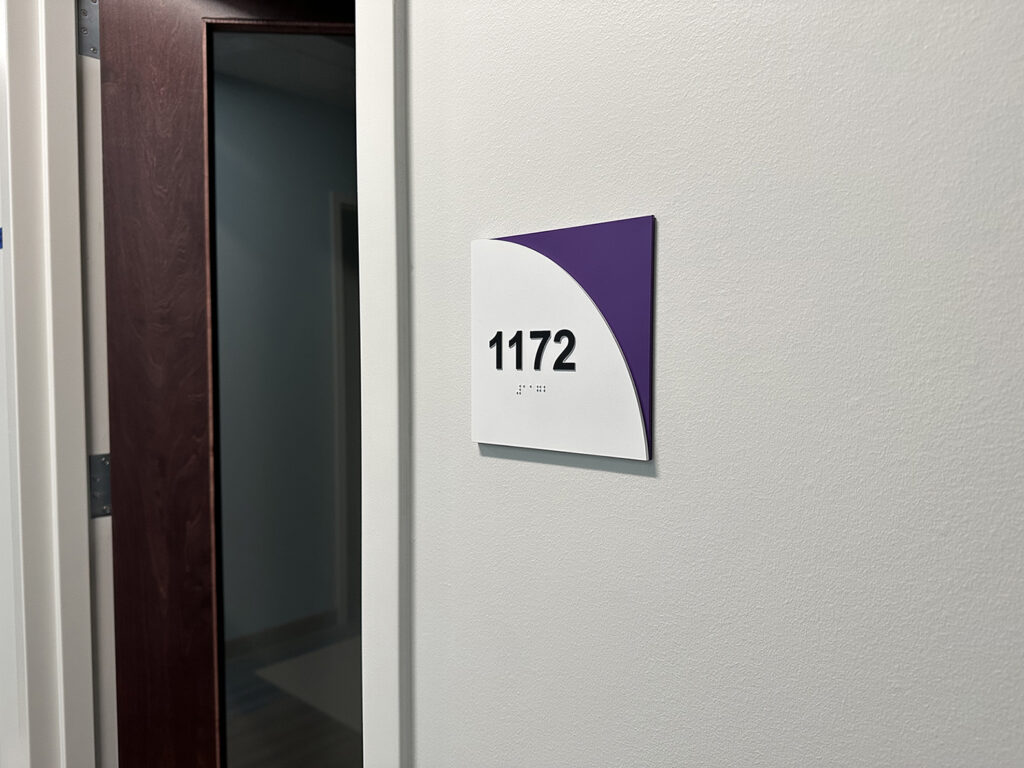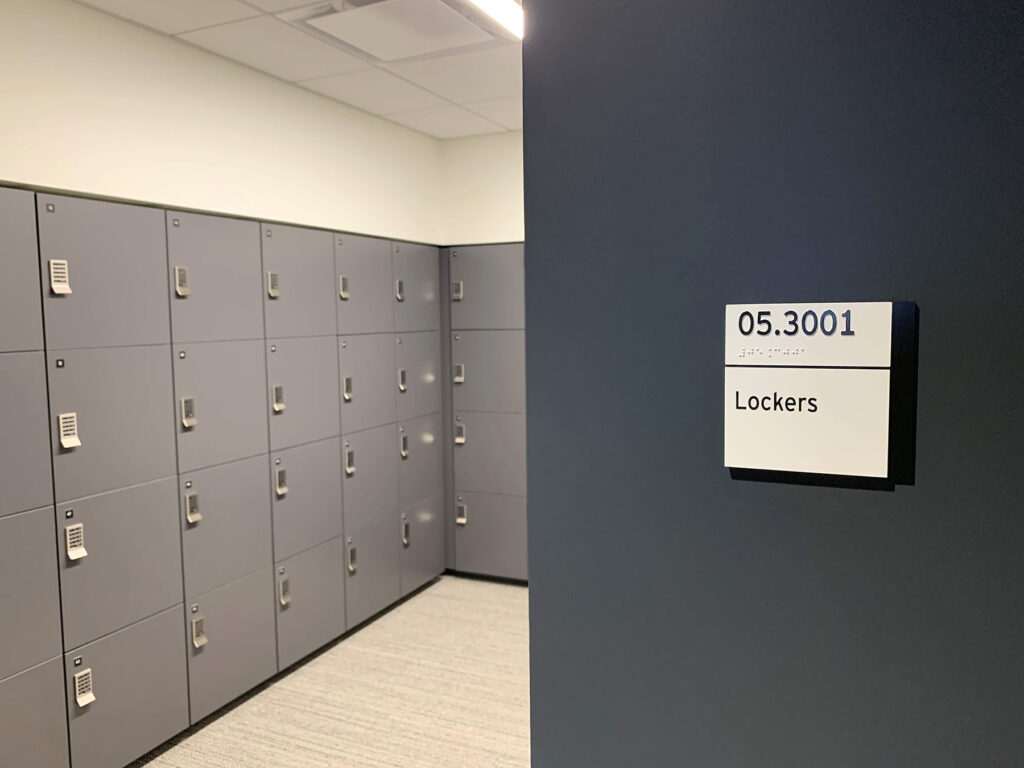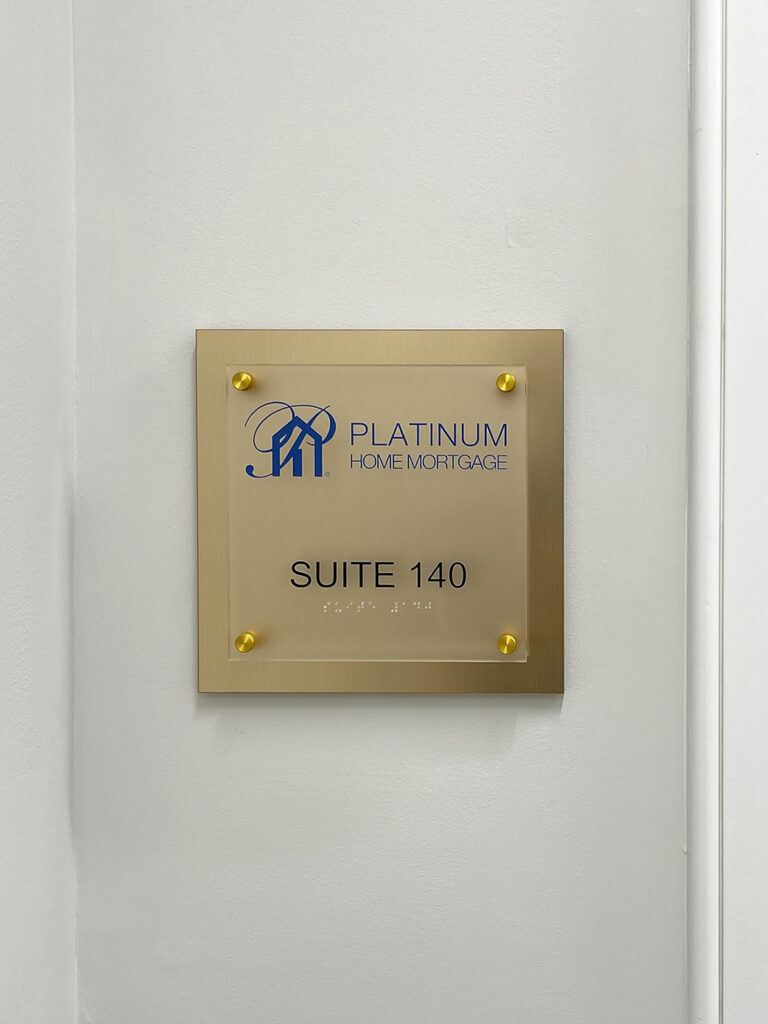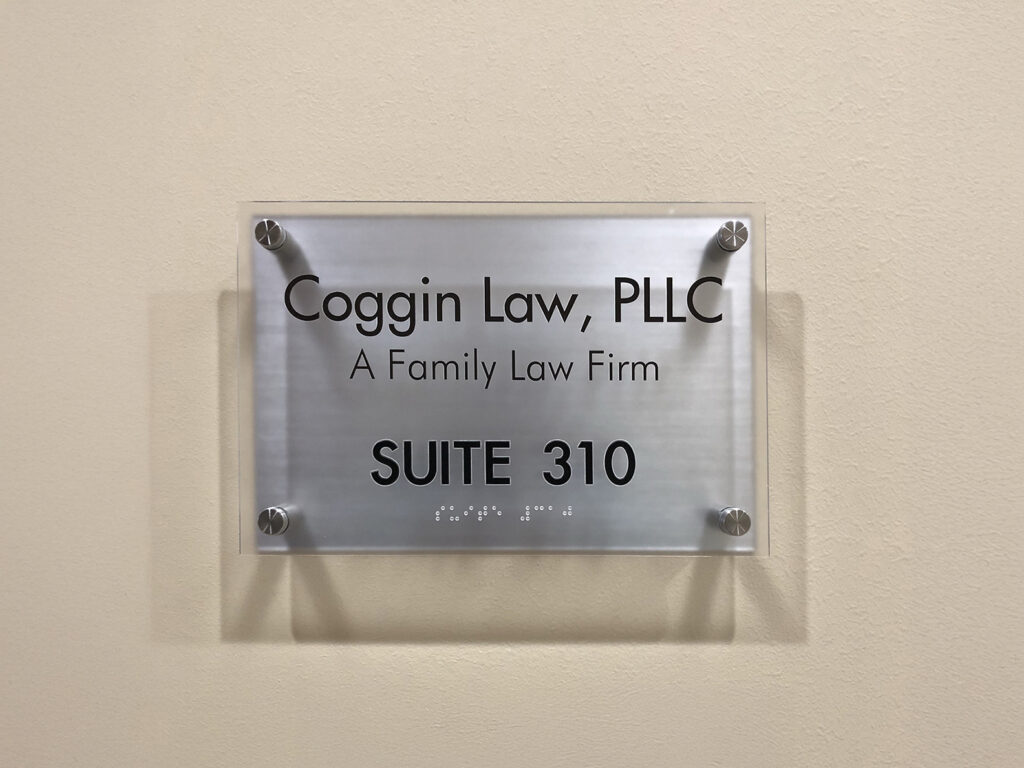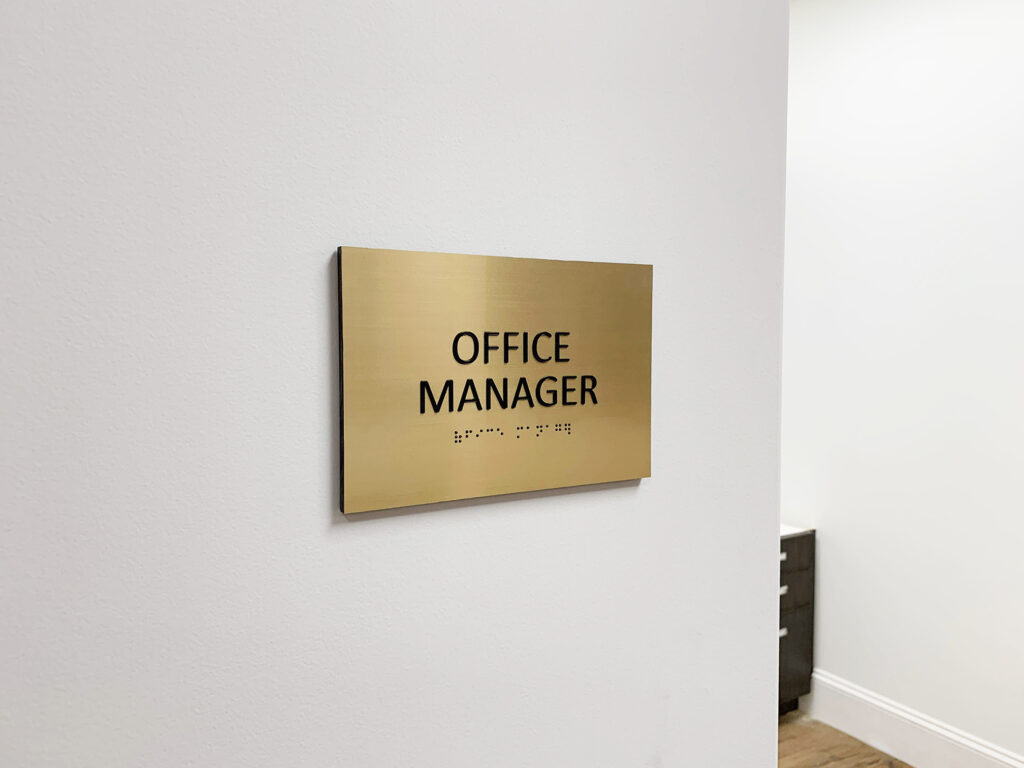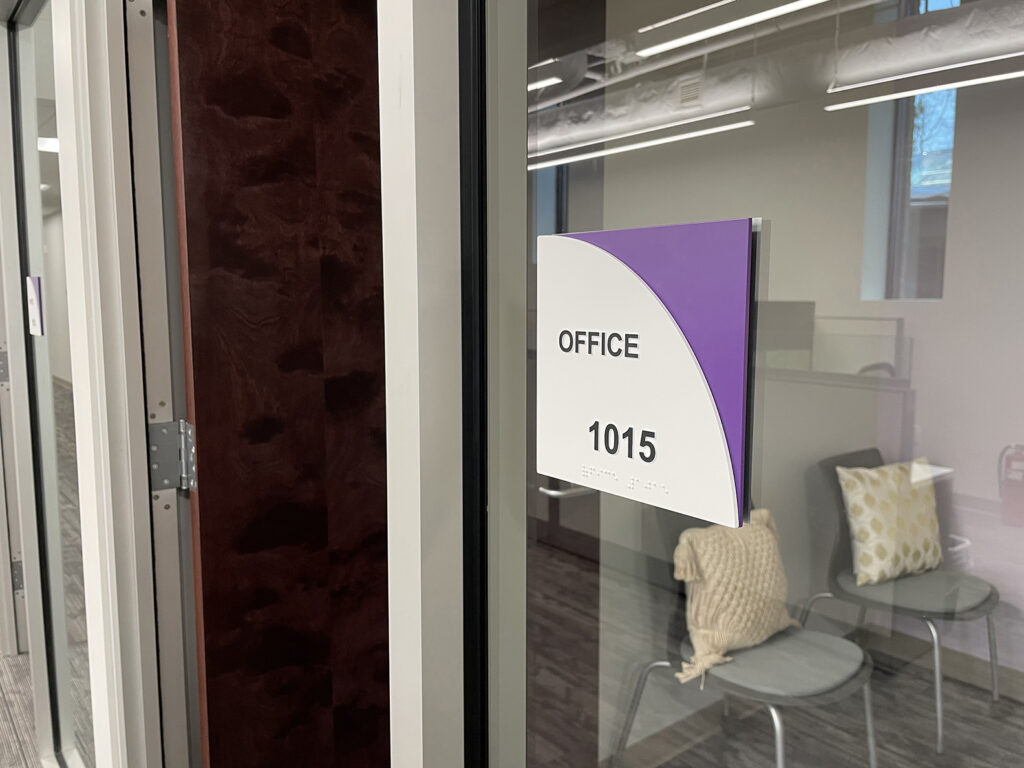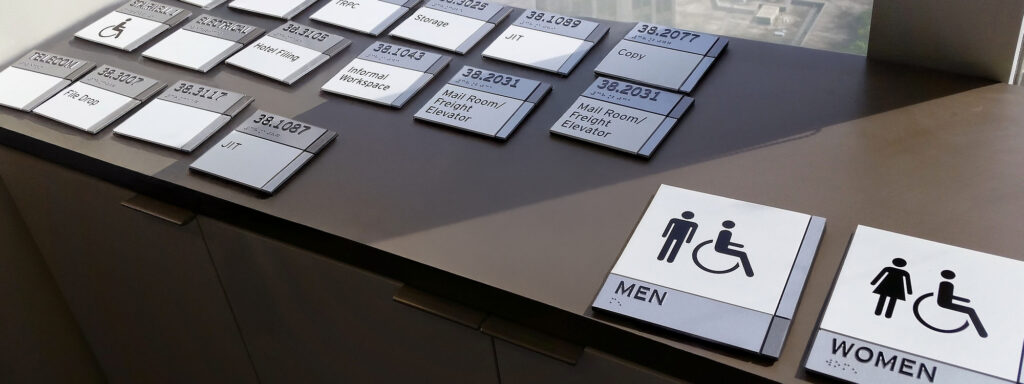

ADA signs help people with visual impairments find and identify rooms on their own, and they are required in almost every commercial building. The Sign Factory designs, fabricates and installs ADA-compliant signs for offices, healthcare facilities, schools, industrial sites and multi-tenant buildings in Charlotte, NC and nationwide, and we design them to match the rest of your interior signage.
What Makes a Sign ADA Compliant
The 2010 ADA Standards for Accessible Design set the rules for signs that identify permanent rooms and spaces. The main requirements are:
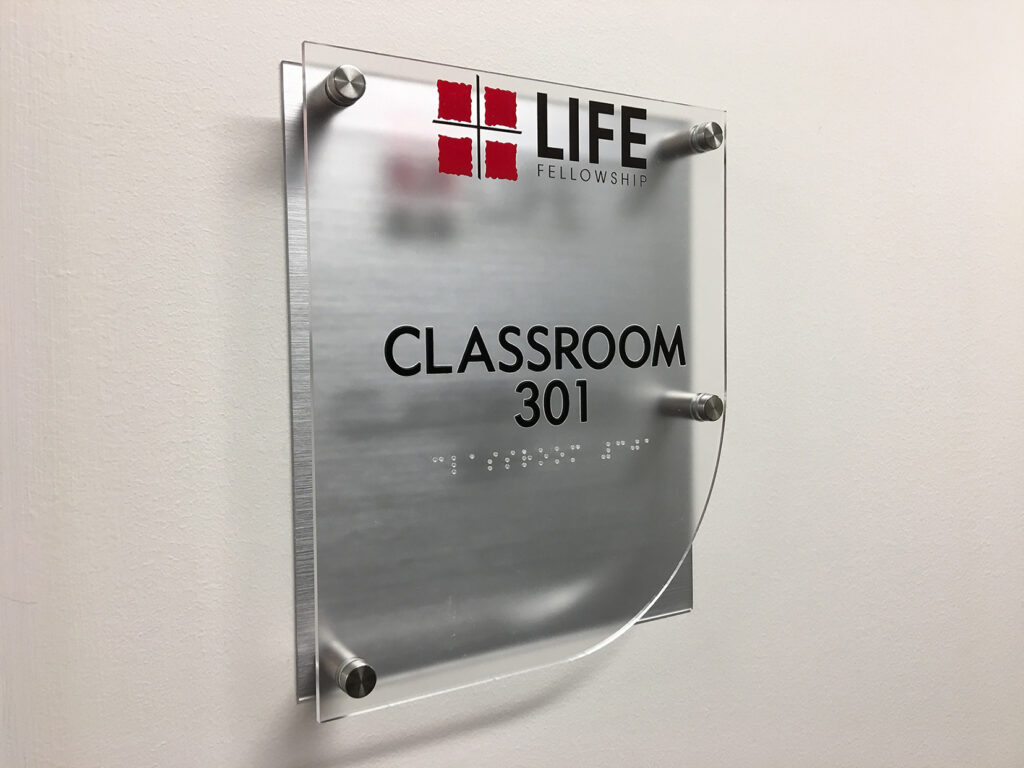
- Raised characters: uppercase, sans serif letters and numbers raised at least 1/32 inch so they can be read by touch.
- Grade 2 Braille: placed directly below the raised text.
- Contrast and finish: characters that contrast with the background, on a non-glare finish.
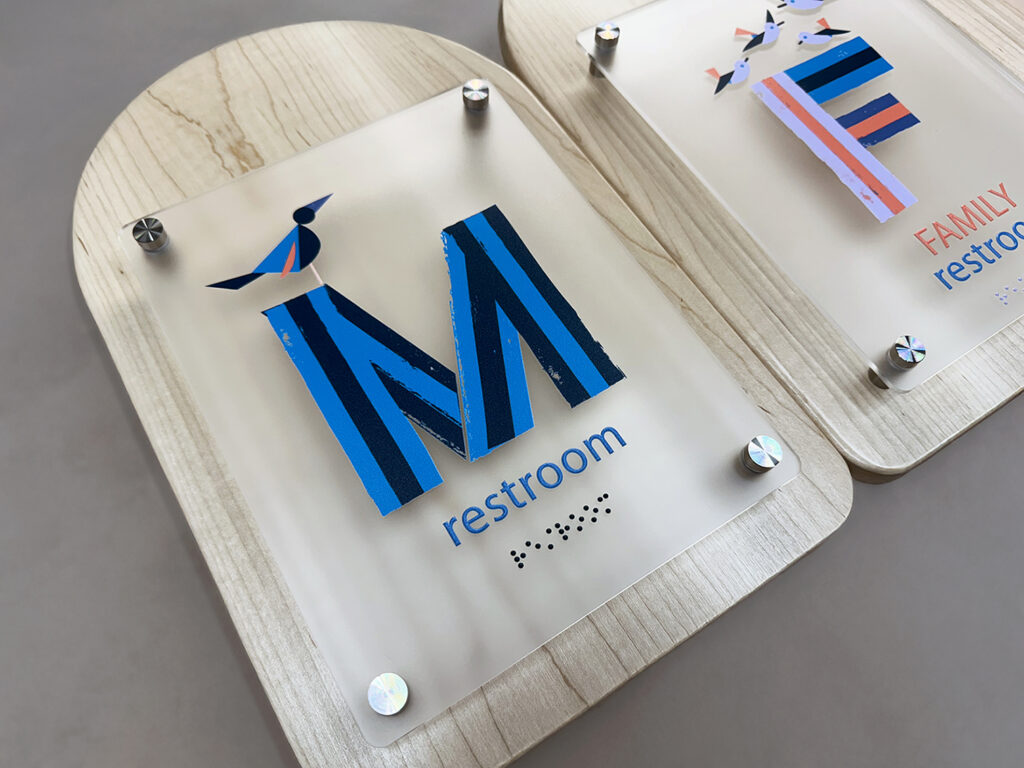
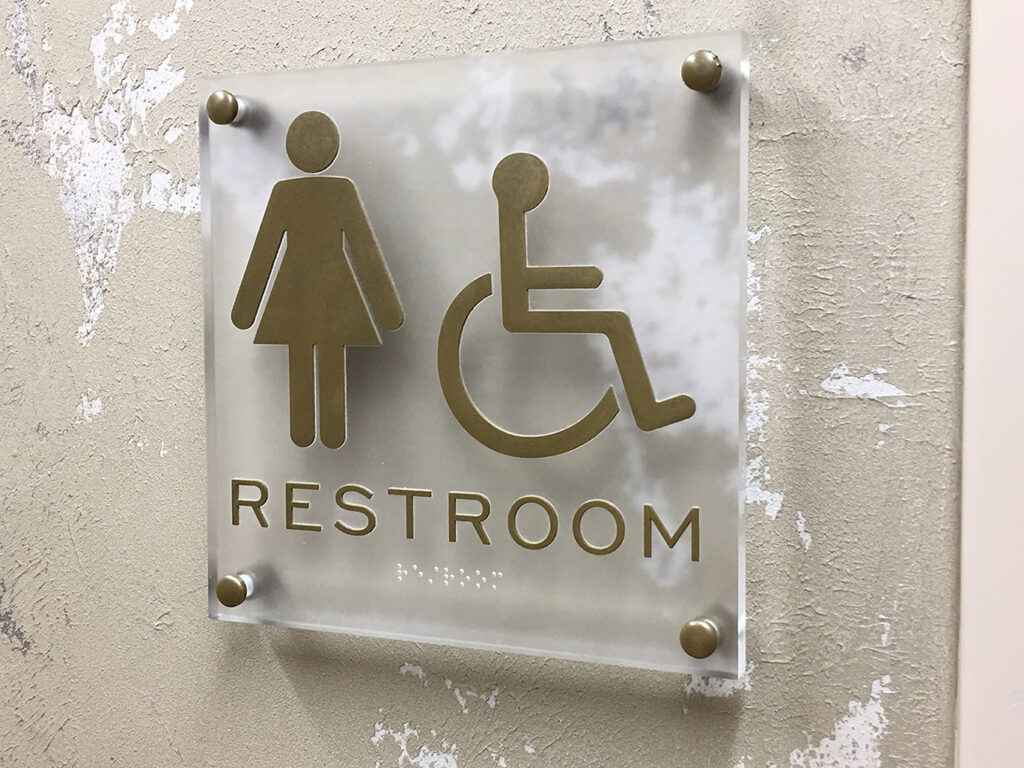
- Pictograms: symbols such as restroom icons sit in their own field, with the matching text and Braille below.
- Mounting height: the baseline of the lowest raised character at least 48 inches above the floor, and the highest no more than 60 inches.
- Location: on the wall at the latch side of the door, where a person can stand to read the sign without being hit by the door as it opens.
Directional and informational signs, such as overhead signs and directories, do not need raised characters or Braille, but they still have rules for character size and contrast. Read the 10 vital principles of ADA signage design.
ADA Signs We Make
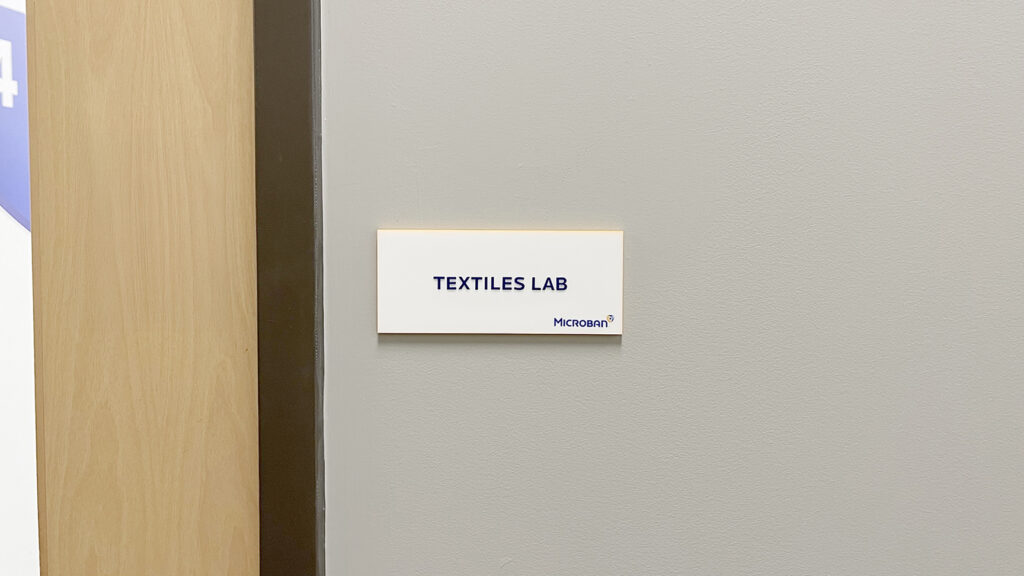
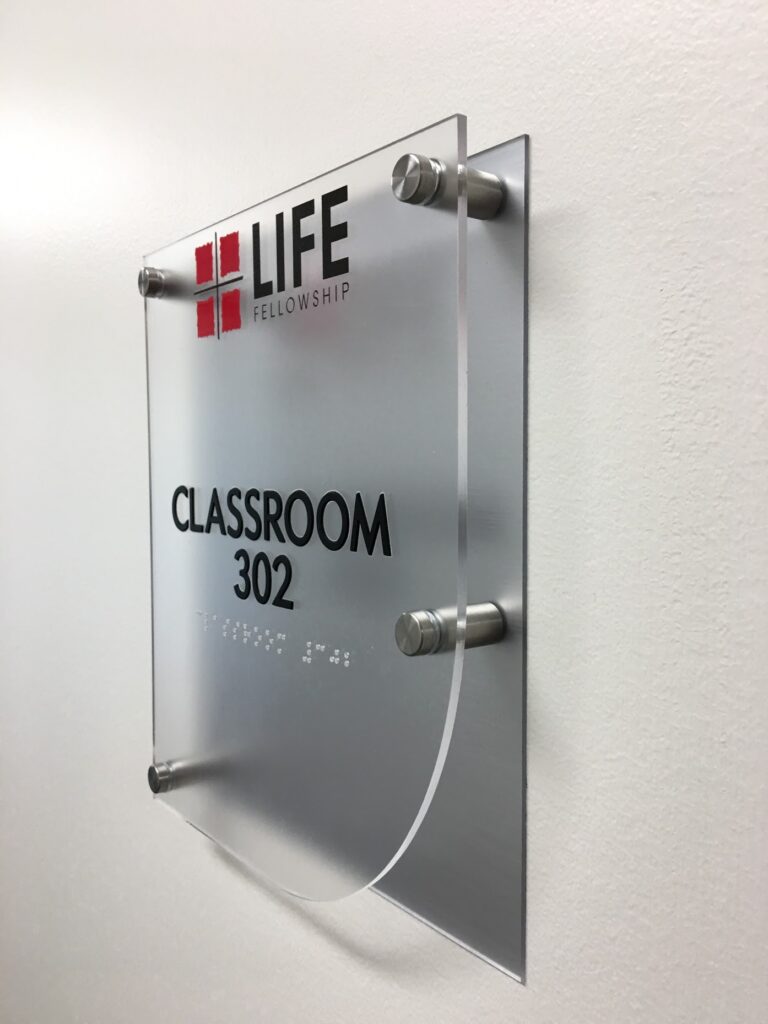
- Room and office identification signs
- Restroom signs, including accessible and family restrooms (see restroom, suite and wayfinding signs)
- Suite numbers and tenant signs
- Stairwell, exit and elevator signs
- Directional and overhead signs
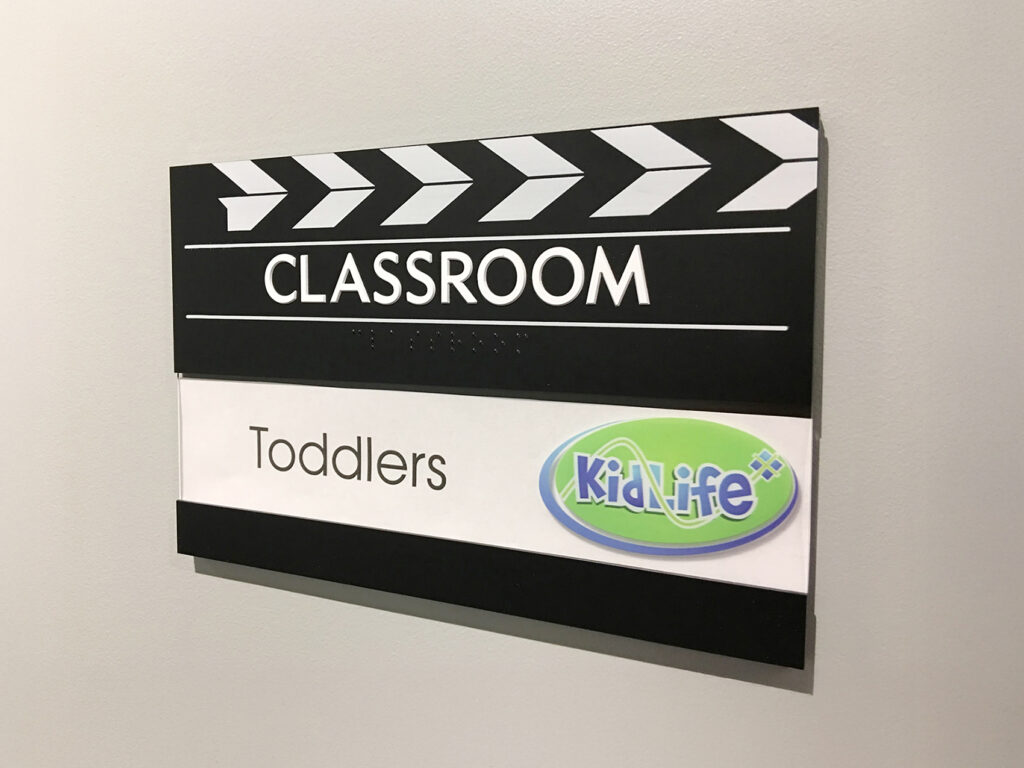
- Signs with windows or inserts so names can be changed without replacing the sign
ADA Signs That Match Your Brand
Compliant does not have to mean plain. ADA signs can use your brand colors, your typeface family within the rules, and materials that match your lobby and wayfinding signs, from painted acrylic to metal finishes. We design them as part of your interior signage family so they look like they belong in the space.
From Floor Plan to Installation
We start from your floor plans and a walk of the building, list every room that needs a sign, and mark where each one goes. You approve a sign schedule and proofs, and our installers mount each sign at the correct height and position. That gives you a complete, consistent set of signs and a clear record for your building inspection.
ADA Signage Projects
We built suite signage, wayfinding and directional signs for Valtech to the company's brand guidelines, and directional and wayfinding signs at all eight McLeod Centers for Wellbeing locations in North Carolina.
Why ADA Signs Matter
Title III of the Americans with Disabilities Act applies to businesses open to the public and to commercial facilities, including offices and industrial buildings. Beyond the legal requirement, ADA signs help every visitor and employee who is blind or has low vision find the restroom, the right office or the exit without asking for help. Missing or incorrect signs are also a common item on building inspections and accessibility complaints, so getting them right the first time saves cost later.
ADA Signage FAQ
Which rooms need ADA signs?
Permanent rooms and spaces such as offices, conference rooms, restrooms, stairwells and exits need tactile signs with Braille. Spaces that change use often, like temporary offices, and directional signs have different rules.
Where should ADA signs be mounted?
On the wall next to the latch side of the door, with the raised characters between 48 and 60 inches above the floor. For double doors the rules change slightly, and we mark each location on your plans.
Can ADA signs show changeable names?
Yes. The room number or name is permanent and tactile, and a paper or acrylic insert above or beside it can show the occupant's name and be updated anytime.
Do you replace signs that are not compliant?
Yes. We can review your existing signs, identify the ones that do not meet the standards and replace them. Read are you in compliance with ADA and Braille signs.
What is Grade 2 Braille?
Grade 2 Braille uses contractions for common words and letter groups, which makes signs shorter and faster to read by touch. It is the Braille the ADA Standards require on signs.
Managing signage across multiple locations or a national rebrand? Learn how our multi-location brand rollout team handles permitting, fabrication and nationwide installation.
Get Compliant ADA Signage
Send us your floor plan and we will prepare a complete ADA sign schedule and quote. Call 704-321-0040 or request a quote.
Portfolio